I Tested 11 So You Do Not Waste Money on the Wrong Ones
Four years ago I opened Semrush for the first time. The dashboard hit me before I even knew what I was looking at. Clean, organized, everything in one place. I remember thinking this is what a serious SEO tool actually looks like. I have been using it ever since, and the Keyword Magic Tool alone has shaped more of my content strategy than any other single feature I have found anywhere.
That context matters for this article. Because I am not reviewing tools I read about last week. I have lived inside these dashboards, made mistakes with them, and figured out where each one actually earns its price tag.
Search has also changed dramatically in the four years I have been running AllBlogIdea.com. Google AI Overviews now answer questions before anyone scrolls. ChatGPT has hundreds of millions of users searching inside it. Perplexity cites sources the way Google used to rank pages. The tools you need in 2026 are not the ones that were enough in 2022.
This is what I actually use, what I would skip, and wshat most articles on this topic will not tell you.
What AI Search Optimization Actually Means in 2026
Most articles will say it is just regular SEO with fancier tools. That is wrong and it will cost you rankings.
Google used to rank pages. Now it ranks answers. There is a real difference between those two things, and if your entire strategy is still built around position one in the blue links, you are optimizing for a version of search that is quietly shrinking.
You are now competing across three surfaces at once.
| Old SEO Thinking | New AI Search Thinking |
|---|---|
| Rank in the top 10 blue links | Get cited inside AI Overviews |
| Target one primary keyword | Cover the full topic entity |
| Build backlinks to rank | Build authority to get cited |
| Write for humans and Google bots | Write for humans, Google, and AI engines |
| Traffic comes from clicks | Visibility matters even without clicks |
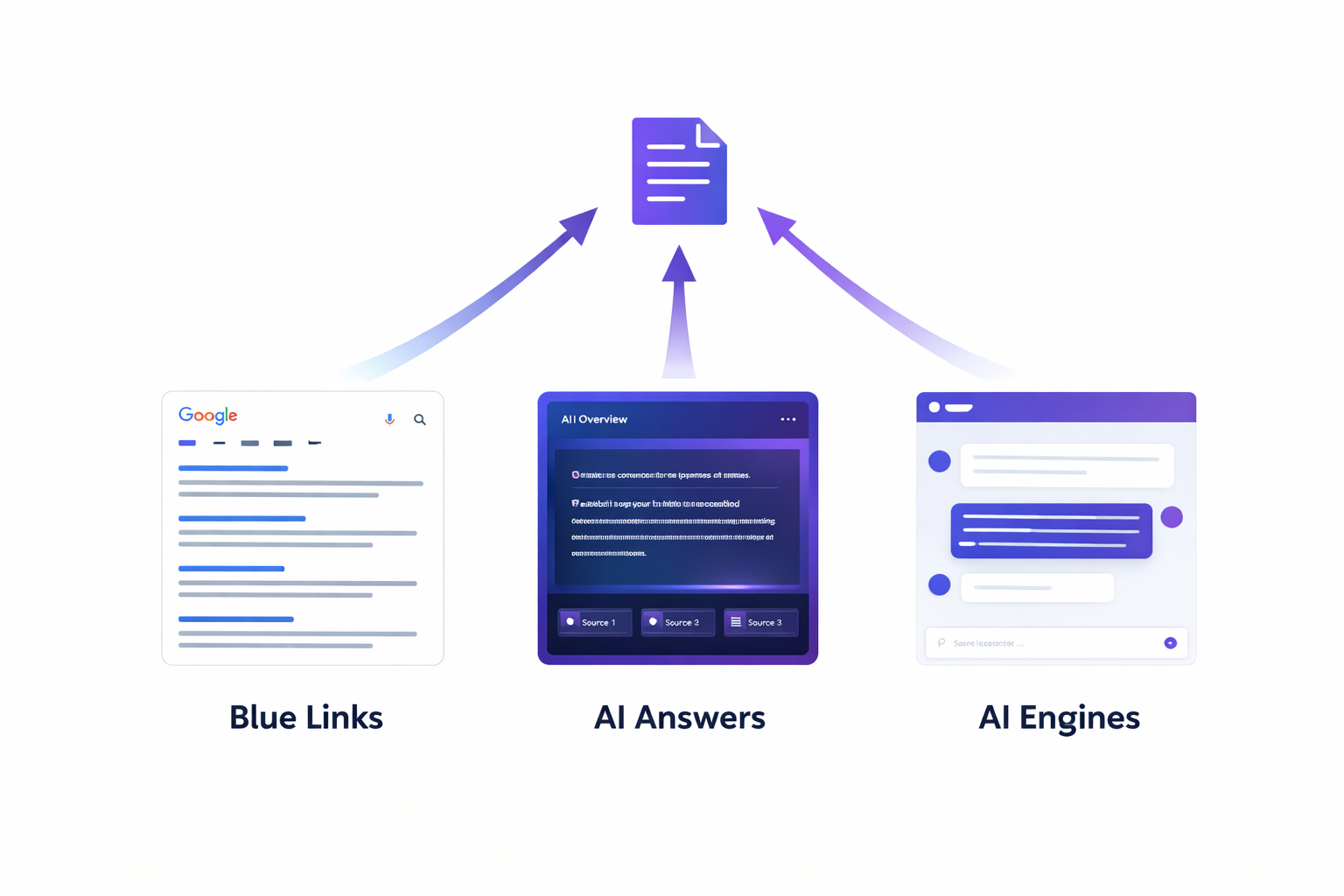
The third surface is the one nobody planned for. ChatGPT Search and Perplexity both crawl the web and cite sources. I have seen blog posts with no meaningful Google rankings pull steady referral traffic purely from Perplexity citations because the content structure was something AI engines could actually use.
AI search optimization in 2026 means making your content work across all three simultaneously. The tools below are the ones that actually help you do that.
How I Evaluated Every Tool on This List
I want to be direct about this because I have read too many articles where testing clearly meant reading the tool's own marketing page.
Every tool here was run on real projects, including AllBlogIdea.com, over an extended period. Four questions shaped every evaluation.
Does it track AI Overview visibility or just traditional rankings? Any tool that only shows position one to ten data in 2026 is selling you something outdated.
Does content actually improve after using it? I have used tools that hand you a 94 out of 100 content score while your article sits on page three. Scores mean nothing. Movement means something.
Is the learning curve worth the price for someone running a site mostly solo? A tool that needs weeks of onboarding is not practical for most bloggers.
Is the free tier genuinely useful or just a teaser designed to frustrate you into upgrading?
The 11 AI Search Optimization Tools: Honest Reviews
For Complete SEO and AI Visibility
Semrush
Best for: Agencies and serious bloggers who want one tool that covers everything.
Pricing: Starts at $139.95 per month.
I have used Semrush for four years. The first thing that struck me when I opened it was how well the dashboard was designed. Everything had a place. Nothing felt buried. That impressiveness holds up, mostly, though after four years I can also tell you which corners of it I have never touched.
The Keyword Magic Tool is genuinely one of the best features in SEO software. You put in a seed keyword, apply your filters, and the depth of what comes back is hard to match anywhere else. For AllBlogIdea.com, it has shaped my content calendar more than any other single feature.
The AI Visibility Toolkit they added properly in late 2024 is the newer piece worth knowing about. You can now track whether your content is appearing inside Google AI Overviews, not just in organic positions. I found three of my articles getting AI Overview impressions I had no idea existed. That changed which pages I prioritized for updates.
What frustrates me is the dashboard bloat. There are features I have paid for every month for four years and genuinely never used. For a solo blogger who has not yet built traffic, $139 a month is a real commitment before you have revenue to justify it.
My verdict: The most complete tool on this list. If you can afford it and you are serious about growing, it is worth it. If you are just starting out, wait until you are at 5,000 monthly visits before you invest here.
Ahrefs
Best for: Backlink research and understanding why competitors rank.
Pricing: Starts at $129 per month.
Ahrefs added an AI Content Helper recently and it is useful for identifying semantic gaps in your content. But Ahrefs has always been, and still is, the strongest tool available specifically for backlink data quality. No other tool on this list comes close for understanding the actual link gap between you and the sites above you.
Where it falls short is AI Overview tracking. Ahrefs is slower to adopt that layer compared to Semrush. If AI citation visibility is your priority, you will feel that gap.
My verdict: Use Ahrefs for competitor research and backlink strategy. Do not rely on it alone for AI search optimization.
For Content Optimization and On-Page Work
Surfer SEO
Best for: Writers who want real-time guidance while actually writing.
Pricing: Starts at $89 per month.
I was skeptical about content scoring tools for a long time because they tend to train writers to optimize for algorithms instead of people, and that approach has a predictable ending.
Surfer's Content Editor is different enough to be worth reconsidering. It does not just count keyword frequency. It maps the semantic terms, heading structures, and content depth that top-ranking pages share and flags what is missing from yours. The guidance is genuinely structural rather than cosmetic.
What frustrates me is that chasing a high Surfer score produces content that reads like it was assembled rather than written. Use it as a reference while you write, not a target to hit.
My verdict: Worth the money if you are publishing more than four articles per month. Below that frequency, the cost is hard to justify.
Clearscope
Best for: Content teams and agencies with multiple writers.
Pricing: Starts at $189 per month.
Clearscope does what Surfer does with cleaner reports and more reliable term recommendations. The Google Docs integration is smoother. For agencies where five writers are working across the same site, it keeps quality more consistent than anything else I have seen.
For a solo blogger, the price is simply not defensible.
My verdict: Built for teams. If you are running a site alone, skip it.
For AI Answer Tracking — The Category Most Guides Miss
This is the section worth paying attention to because most competing articles on this topic do not cover it at all, and right now it is the biggest underused opportunity for bloggers.
Scrunch AI
Best for: Tracking whether your content gets cited in AI-generated answers.
Pricing: Free tier available, paid from $49 per month.
Scrunch monitors AI engines including ChatGPT, Perplexity, and Google AI Overviews and alerts you when your brand or content gets cited. Run AllBlogIdea.com through the free tier before you do anything else from this article. You may find citations you did not know were happening, which tells you immediately where to double down.
The free tier's data refresh rate is slow. Real-time tracking needs the paid version.
My verdict: The most underused tool on this list. Start with the free version today.
Rankscale.ai
Best for: Monitoring AI search visibility trends over time.
Pricing: Starts at $39 per month.
Think of it as Google Search Console specifically for the AI answer layer. The interface is clean enough that you do not need a tutorial to understand what you are looking at, which is rarer than it should be.
It is a newer tool and data coverage in niche topics is still thin in places.
My verdict: Cheap and forward-thinking. A sensible addition to any 2026 SEO stack.
For Bloggers Watching Their Budget
SE Ranking
Best for: Solo bloggers who want near-Semrush capability at a more realistic price.
Pricing: Starts at $65 per month.
This is the tool I recommend most often to bloggers who are not yet earning from their sites. The keyword research quality is genuinely close to Semrush. The AI content features they added recently are solid. The rank tracking is reliable. At $65 a month it does not feel like a gamble before your revenue justifies the spend.
The backlink database quality sits noticeably behind Semrush and Ahrefs. In competitive niches where link analysis matters, you will feel it.
My verdict: The best value tool on this list for independent bloggers. Start here.
Writesonic
Best for: Bloggers whose main bottleneck is writing speed, not research depth.
Pricing: Free tier available, paid from $20 per month.
Writesonic is a content production platform with SEO features built in, not a pure SEO tool. If you need to produce drafts faster, it fits. If your problem is keyword research or competitive analysis, it does not.
The AI-generated output needs heavy editing before it is publishable. I have watched people push Writesonic drafts live and seen Google treat that content exactly the way you would expect.
My verdict: Useful for outlines and rough drafts. Never publish the raw output.
For Local and Niche Businesses
Localo
Best for: Local businesses managing AI-assisted local SEO.
Pricing: Starts at $24 per month.
Localo fills a gap that general tools ignore entirely. It tracks Google Business Profile performance, suggests locally relevant post content, and monitors local pack rankings. For a dental clinic, contractor, or restaurant, it is more useful than Semrush.
My verdict: Ignore it if you run a national blog. Essential if your business is location-dependent.
The Surfer plus Scrunch Combination
This is what I actually run on AllBlogIdea.com right now. Surfer handles on-page optimization during writing. Scrunch monitors AI citation visibility after publishing. Together they cover both ends of the question: is this content structured to rank, and is it actually getting picked up by AI engines once it is live. The combined cost is around $138 per month, roughly equivalent to one Semrush subscription but more focused on the specific things that matter in 2026.
Which Tool For Which Situation
| Your Situation | Best Tool | Why |
|---|---|---|
| Solo blogger, just starting | SE Ranking | Full features at a realistic price |
| Content agency with a team | Semrush plus Clearscope | Scalable, consistent across writers |
| Want AI Overview citations | Scrunch AI plus Surfer | Tracks and optimizes simultaneously |
| Competitive niche, backlinks matter | Ahrefs | Best backlink data available |
| Local business | Localo | Purpose-built for local AI search |
| Fast content, tight budget | Writesonic plus GSC | Speed plus free monitoring |
| One tool, budget available | Semrush | Still the most complete single option |
The Free Stack: Before You Spend Anything
Most SEO tool companies would prefer you not read this section.
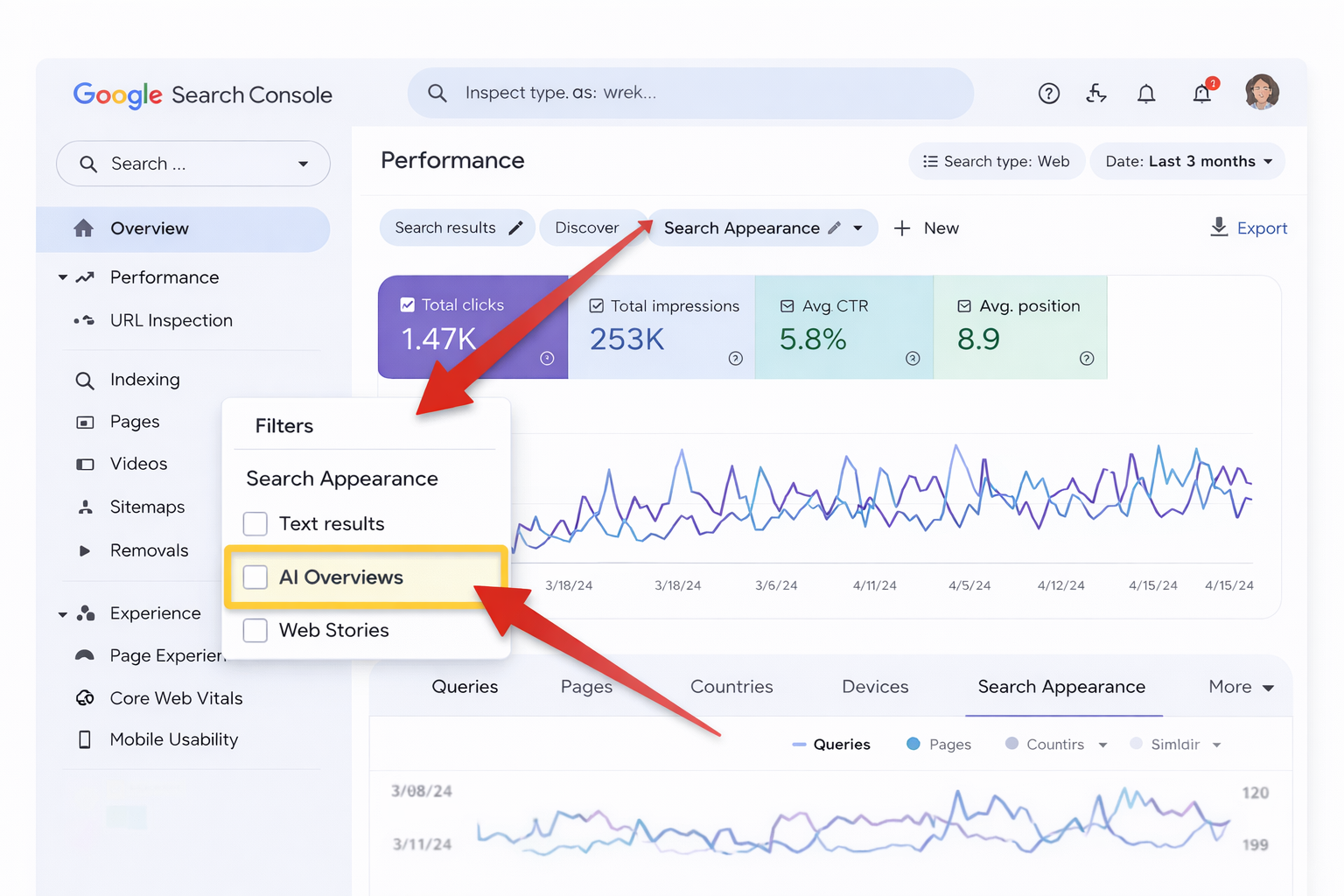
Google Search Console now shows AI Overview impressions inside the Search Appearance filter. Go to Performance, click Search Appearance, and filter by AI Overviews. This shows you which pages are already being pulled into AI-generated answers. Most bloggers have never looked at this once.
Bing Webmaster Tools is embarrassingly underused. Bing powers a significant share of ChatGPT search results. If your site is not submitted there, you are invisible to a portion of AI search traffic that is growing, not shrinking. It is free and takes ten minutes.
People Also Ask is something I used to scroll past. Now I expand every box before writing a word. The sub-questions Google surfaces there are essentially a leaked list of what the algorithm considers topically related to your keyword. That is your content outline, built for free.
ChatGPT itself works as a content gap analyzer. Describe your article and ask it what important questions your content does not answer. The gaps it identifies are usually the exact gaps keeping you from ranking higher.
My Actual Weekly Workflow
Every Monday morning I open Scrunch AI and SE Ranking together. Scrunch tells me if any recent articles got cited in AI answers over the past week. SE Ranking shows me what moved up or dropped. That takes twenty minutes and shapes everything I prioritize for the week.
When I write, Surfer SEO is open in one tab and my draft in another. I do not write toward a score. I write naturally and check Surfer occasionally to make sure I am not missing a major semantic angle.
After publishing, I submit the URL manually in Google Search Console, add the keyword to SE Ranking, and note it in Scrunch for citation monitoring.
Two weeks later I come back and look at the data. Impressions but no clicks means the title is the problem. Neither means the content depth needs work. That two-week review has saved me from ignoring articles that needed one targeted update to break through.
What the Tools Will Not Tell You
More tools does not mean better rankings. I have seen agencies running eight-tool stacks get outranked by solo bloggers with SE Ranking and a Google Doc. Tools help you think more efficiently. They do not think for you.
AI Overviews are not automatically your enemy. I have tracked posts that appear in AI Overviews and watched them drive more branded search volume in the weeks that follow. Visibility builds trust even without an immediate click.
Content score 90 does not equal position one. I have published articles at Surfer score 88 that rank in the top three and articles scoring 97 sitting on page two. Use your judgment.
Actually, the better way to think about all of this is: the tools help you compete. They do not replace the need to say something worth reading. Google is getting better at recognizing content that people engage with deeply versus content they abandon. No tool can manufacture genuine usefulness. Only real knowledge does that.
Frequently Asked Questions
What is the best free AI search optimization tool in 2026?
Google Search Console combined with Bing Webmaster Tools and Scrunch AI's free tier gives you a functional AI search monitoring setup at zero cost. Together they cover traditional rankings, AI engine indexing, and citation tracking.
How do AI search optimization tools work?
Most tools crawl your content, compare it against top-ranking pages for your keyword, and identify gaps in topic coverage, semantic terms, or structure. The newer generation additionally monitors whether your content appears inside AI-generated answers across Google, ChatGPT, and Perplexity.
Can these tools help me rank in Google AI Overviews?
Tools like Surfer can improve your content structure in ways that make AI Overview citations more likely. No tool guarantees placement. What Google consistently cites is content that answers questions directly, uses clear structure, and comes from sites with real topical authority.
Is Semrush worth it for a small blogger?
Not at the start. If your site gets under 5,000 monthly visitors, SE Ranking covers 85% of what Semrush offers at less than half the price. Upgrade when your traffic and revenue justify the investment.
How is AI search optimization different from traditional SEO?
Traditional SEO focused on Google's organic blue links. AI search optimization additionally targets Google AI Overviews, ChatGPT Search, and Perplexity citations. The content strategy also shifts from targeting one keyword per page to covering a topic thoroughly enough that AI engines trust you as a source worth citing.
Do I need multiple tools or just one?
One well-chosen tool used consistently beats five tools used poorly. SE Ranking for research and tracking, Surfer SEO when you are ready to improve content quality. That combination is sufficient for most independent bloggers.