
If you have been trying to figure out whether thehrwp is worth adopting, you have probably already read two or three articles that describe every module in polished detail without telling you anything useful. They all say the same thing: cloud-based, modular, scalable, AI-powered. None of them mention what breaks, what takes longer than advertised, or what you will regret enabling on day one. This article is the version those writers were too cautious to publish.
When I first logged into the platform, the drag-and-drop interface shown in the marketing videos was not there. What I found instead was a manual setup screen that required me to map basic user fields by hand before anything worked. That gap between the demo and the reality is a good summary of the whole platform.
What TheHRWP Actually Is (Not the Sales Version)
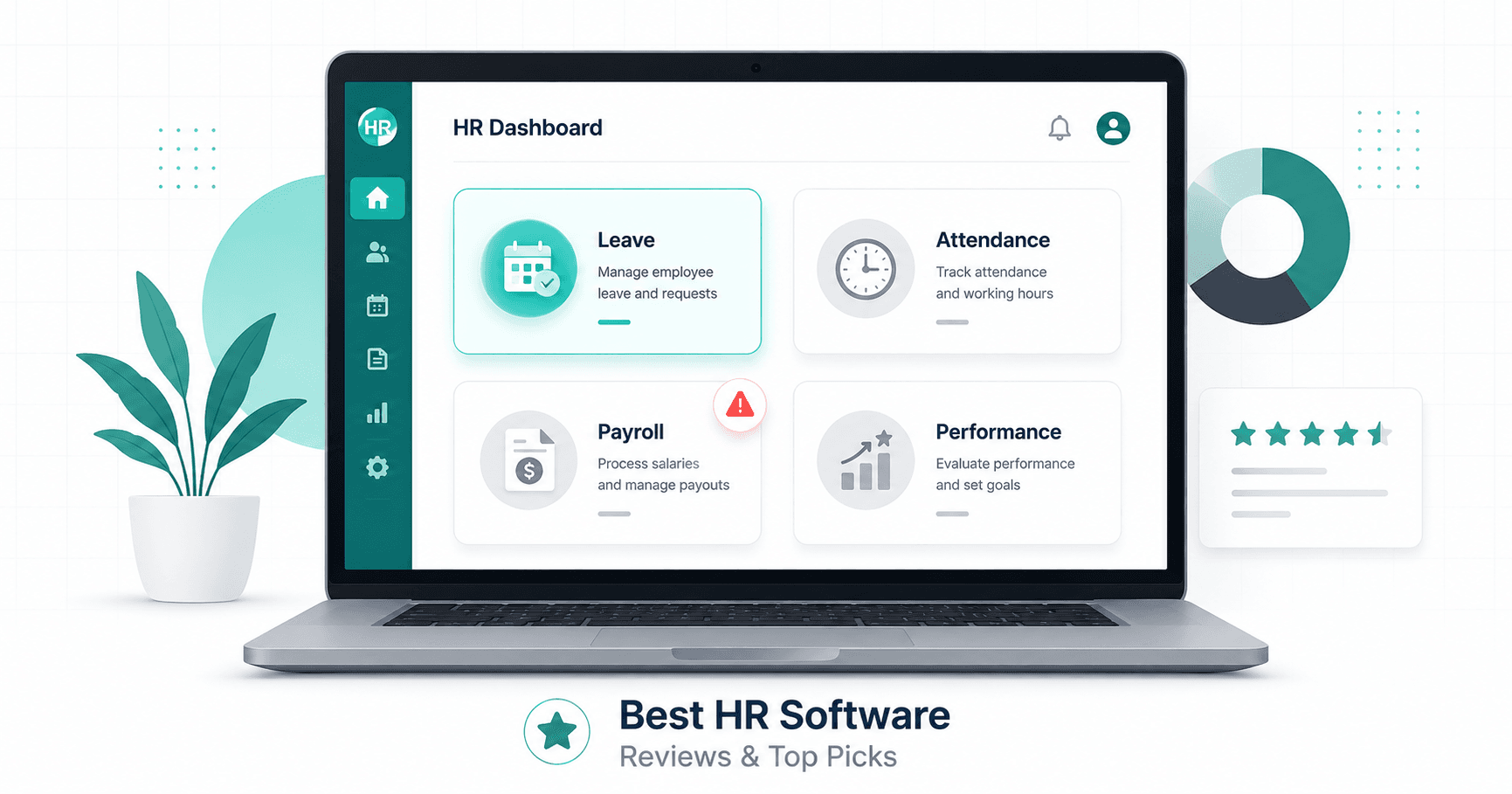
TheHRWP, the Human Resource Workflow Platform, is a cloud-based HR tool that centralizes the employee lifecycle into one system. Recruitment, onboarding, leave, attendance, payroll integration, and performance reviews all live in one dashboard instead of scattered across spreadsheets and separate tools.
Centralizing your HR operations and actually making your team use them are two different problems, and TheHRWP solves the first one better than the second.
That is the honest version of the pitch. The platform is genuinely useful for companies currently running HR on a mix of Google Sheets, email chains, and WhatsApp approvals. If that describes your organization, TheHRWP will feel like a real step forward. If you are already on a structured HRIS, your result depends almost entirely on how cleanly your existing data migrates.
What the platform is not: it is not a plug-and-play tool for companies with messy legacy payroll configurations. It is not a replacement for a dedicated ATS if your hiring volume exceeds fifty positions a month. The AI features are forecasting tools, not decision engines. They surface patterns. Your HR team still interprets them.
One technical point worth knowing upfront: TheHRWP runs each module (payroll, attendance, recruitment) as a separate program, and these programs talk to each other over an internal network. When an employee updates their bank account in the self-service portal, that change has to reach every module before it takes full effect. If there is any delay, your payroll module may still hold the old bank number while the main profile shows the new one. This is standard for modern cloud HR platforms. Knowing it exists means you can plan for it instead of being surprised after your first payroll run.
TheHRWP Core Modules: Which Ones to Turn On First
Here is the mistake almost every implementation team makes: they enable every module on day one because the pricing includes it. Two weeks later, half the staff are confused, the admin is fielding support tickets, and adoption is dead before it starts.
Turn on two modules first. That is it.
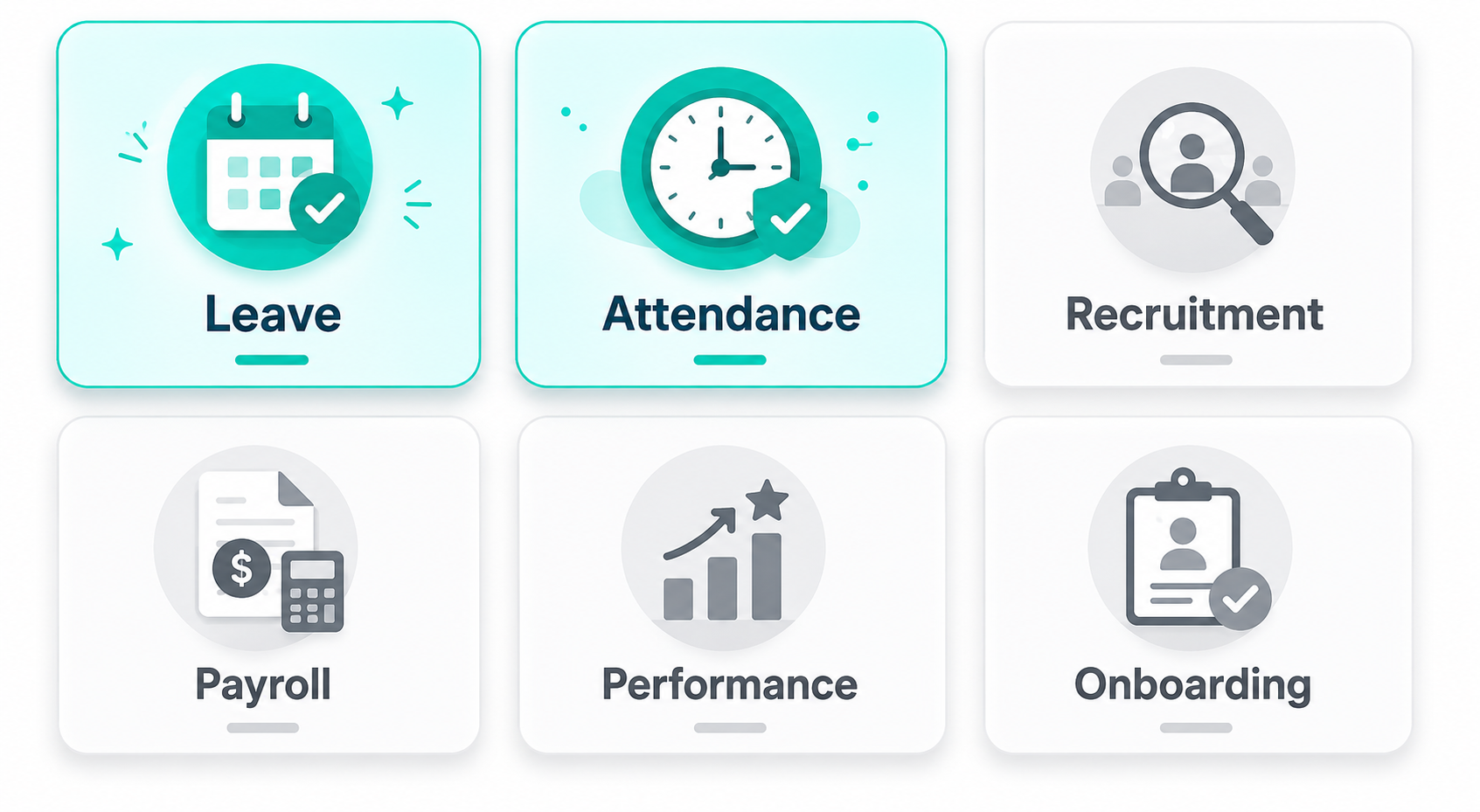
Leave and Attendance: Start Here
This is the module to enable first. Employees interact with it every week, it produces visible value fast, and it has the lowest failure rate during initial setup. Leave requests, approvals, and balance tracking replace the WhatsApp messages and email chains that most small HR teams currently run. The self-service portal reduces routine HR queries within the first thirty days.
One mistake to learn from: I once configured the auto-rejection timer to twenty-four hours inside the workflow rules. Every leave request submitted on a Friday night was automatically rejected by Saturday evening before any manager opened their laptop. Shift workers came in on Monday confused and angry. The fix took five minutes once I found the right setting. Finding that setting took an hour. Check your auto-rejection timer before go-live and set it to at least seventy-two hours.
Recruitment and ATS
The recruitment module works reliably for mid-sized hiring pipelines of ten to forty open positions at a time. It sorts applications automatically, schedules screening calls, and tracks candidate status in one place. The limitation is job board connectivity. If you source candidates from a board not on the pre-built connector list, you are pulling them in manually until someone sets up a custom connection. That is a developer task, not an HR task. Account for it before launch.
Payroll Integration
This is where most implementations slow down. TheHRWP does not run payroll natively in most configurations. It passes data to your payroll processor. If your processor is on the supported list, the sync is reliable. If it is not, you need developer time to build the connection manually. That is outside what most HR admins can handle. Be honest about your technical resources before you scope this integration.
Performance and Appraisals: Enable Last
Enable this module last. Not because it is unimportant, but because appraisal software only works when employees already trust the platform for daily tasks. A performance tracking system that nobody opens because leave requests still go to WhatsApp is a waste of configuration time. Sequence matters more than speed.
The Data Migration Step That Makes or Breaks Your TheHRWP Rollout
Review the HR Software Implementation Checklist before moving any live records. It covers field mapping, duplicate detection, and rollback planning.
Bad data migrated fast is just bad data with a better interface.
Most setup guides tell you to export your old spreadsheet to a CSV and upload it. That advice will break your deployment. Legacy HR data is messy. People leave cells blank. Date formats are inconsistent across files. The same employee appears twice with slightly different name spellings from two different spreadsheets. TheHRWP's import tool does not automatically merge duplicate records. You get two profiles for the same person. If payroll syncs before you clean them, you have a payroll error in month one.
Three failure modes that actually happen during TheHRWP data migration:
- Duplicate employee records. The same person appears as ‘Priya Sharma,’ ‘P. Sharma,’ and an entry from the old payroll export. Run a deduplication check on your source data before import. Do not rely on the platform to catch this.
- Date format mismatches. Your spreadsheet stores dates as ‘01/04/2024’ or ‘April 1, 2024.’ The platform expects standardized format. Convert every date field to YYYY-MM-DD before running the import. This format never causes errors regardless of regional settings.
- Blank fields that freeze approval chains. If an employee record has no manager assignment or department code, the approval chain breaks with no error message. The employee submits a leave request. It goes nowhere. Nobody gets notified. It sits there until someone manually checks the admin panel.
Before you run any import, prepare your data in a separate folder outside the platform:
- Set one unique numeric ID for every employee. Do not use names or email addresses. People change names. A numeric ID never changes.
- Decide how to handle blank fields. Every empty cell should be treated as either an empty value or a blank entry. Pick one rule and apply it across every record before import.
- Run the platform's built-in validation tool before the actual import. It flags mismatches between your source data and the platform's requirements. Give it at least two hours of your attention. Most guides mention it in one sentence. It deserves your full focus.
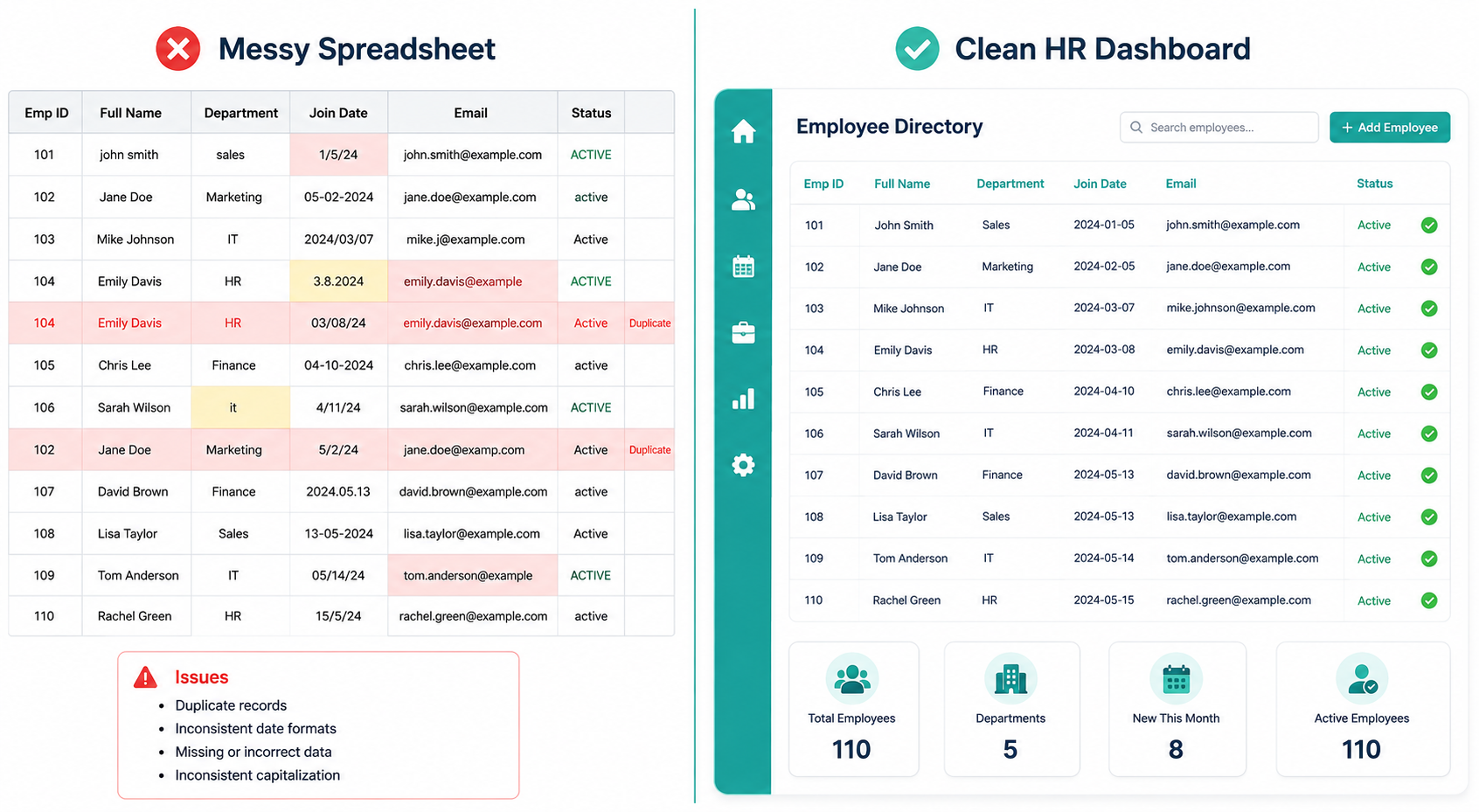
Fix the data before import. Not during. Not after. Before.
What Breaks After Go-Live on TheHRWP and How to Fix It Before It Happens
Go-live is not the finish line. It is the start of a different set of problems. Every competitor article stops here. This section covers what actually happens in the first ninety days.
The Integration That Stops Working Without Warning
TheHRWP connects to tools like Slack, Microsoft Teams, and accounting software through security keys that authenticate the connection. These keys expire every thirty to ninety days under standard security policies. When a key expires, the integration stops working. The dashboard does not show a red error. It simply stops sending attendance updates or onboarding notifications to your connected tools. Everything looks fine until a manager notices the automated updates stopped appearing two weeks ago.
The fix takes ten minutes: set a recurring calendar reminder to rotate your integration credentials before they expire. Log into the admin panel, clear the stale key, generate a new one. Do this on a schedule. Finding out the sync broke because someone noticed missing data is a much harder conversation.
An integration is only as reliable as the person who remembers to rotate the credentials on schedule."
Frozen Approval Chains
If a manager goes on leave without setting a backup approver, their team's requests stall with no alert to anyone. The platform does not auto-escalate unless you have configured escalation rules explicitly. This is a setup step that every guide skips because it is not interesting to write about. Set backup approvers for every manager before go-live.
During our second week live, three expense approvals froze completely because a regional manager went on vacation without setting a delegation rule. The requests sat in an unmonitored queue for four days. I found them by manually checking the admin panel after someone escalated to me directly. The fix was straightforward once I located the access control settings. Not finding it quickly was the problem.
Notification Fatigue That Kills Adoption
TheHRWP's default settings send alerts for every approval event, every status update, and every system reminder. Employees start ignoring the emails within a week. Once they stop reading the notifications, they stop trusting the portal, and within a month they are back to WhatsApp. Before go-live, open the admin panel under user preferences and disable everything that is not directly actionable. This takes twenty minutes and protects your entire adoption effort.
The Two-Week Adoption Window
Employees who do not find value in the portal within the first two weeks will not come back to it. During the first week, have your HR team proactively show every employee one useful thing the platform already has for them: their leave balance, their payslip, their upcoming review date. One direct demonstration is worth more than ten reminder emails.
Where TheHRWP Earns Its Price and Where It Does Not
For teams between twenty and two hundred employees running HR manually or across scattered tools, TheHRWP earns its cost quickly. Eliminating manual leave tracking and attendance management, tasks that eat two to four hours of HR time per week in most organizations this size, covers the subscription cost within two to three months.
If your HR team spends more than two hours a week chasing leave approvals over WhatsApp, TheHRWP has already paid for itself in the first month.
For smaller teams under fifteen people, the full platform is overkill. You are paying for depth you will not use.
For large enterprises with complex multi-state or cross-border compliance requirements, TheHRWP works but the compliance configuration is not automatic. Your admin will need to map regional labor rules manually. This is standard for mid-market HR platforms. The sales team will not mention it.
Compared to enterprise platforms like Workday, TheHRWP delivers the same core HR functions at a fraction of the cost without needing a specialist implementation firm. Compared to basic tools like BambooHR, it offers deeper workflow customization and better analytics for growing teams. It sits at the right price point for companies that have outgrown spreadsheets but are not ready for an enterprise contract.
The counter-intuitive truth: the companies that get the most value from TheHRWP are not the ones with the most complex needs. They are the ones organized enough to clean their data correctly before migration and disciplined enough to roll out one module at a time.
Your next step is to list your three biggest HR time drains right now. Match them against the module rollout sequence in this article. Start with the one that costs your team the most hours per week.
Frequently Asked Questions
Why is my leave request stuck in TheHRWP with no notification going out?
The most common cause is a missing backup approver. When the primary approver is unavailable and no escalation rule is configured, the request sits idle with no alert. Go to Admin Settings, find Approval Chains, and assign a backup approver for every manager.
My Slack integration stopped working without any error message. What happened?
Your authentication key expired. Security policies force these connections to drop every thirty to ninety days. Log into your admin panel, clear the expired credentials, and generate a new key. Set a recurring calendar reminder to do this monthly so the sync never drops silently.
How long does it actually take to set up TheHRWP for fifty people?
Two to four weeks if your employee data is clean and you are enabling two modules to start. Four to eight weeks if you are migrating messy spreadsheets or need a custom payroll connection. Any vendor promise of forty-eight hours assumes zero existing data, zero legacy systems, and zero custom workflows.
Does TheHRWP handle Indian payroll compliance like PF and ESI?
It supports regional compliance configuration but does not arrive pre-loaded with every state rule. Your admin must manually configure PF percentages, ESI rates, and TDS rules for your region. Test these in a separate environment before pointing the tool at live payroll data.
Can employees use TheHRWP on mobile without downloading an app?
Yes, the mobile browser version handles most employee tasks including leave requests, payslip downloads, and attendance logging. The dedicated app gives a better experience for managers who handle approvals frequently.
What happens to our data if we cancel the TheHRWP subscription?
Request a full data export before canceling. The platform allows export in standard formats, but the access window after cancellation varies by plan. Read the data retention terms in your subscription agreement before you reach this point.


